 how-to
What to Do After a Car Accident: Step-by-Step
Table of Contents
- Check for Injuries and Make the Scene Safe
- Exchange Information and Gather Witness Details
- Car Accident Evidence Checklist: Document the Scene
- What to Say to Insurance After a Car Accident
- Seek Medical Evaluation Even Without Obvious Symptoms
- Statute of Limitations for Car Accidents: Know Your Deadline
- Post-Accident Mental Health and Recovery
- When to Contact a Personal Injury Attorney After a Car Accident
- Frequently Asked Questions
Last Updated: August 28, 2026
Most people freeze after a car accident. The shock, the noise, the sudden stop, your brain isn't wired to immediately shift into documentation mode. But what you do in the next 30 minutes can determine whether your insurance claim succeeds, whether you receive fair compensation, and whether your legal rights stay intact. This guide from Central Illinois Legal Advocates walks you through every step, from the moment the collision happens to the decisions you'll face weeks later.
Check for Injuries and Make the Scene Safe
The first priority after any car accident is human safety. Take a breath and assess whether you or anyone in your vehicle is injured. Pain from whiplash and other soft-tissue injuries can be masked by adrenaline, so the absence of obvious symptoms doesn't mean everyone is fine.
Do not move anyone who may have a neck or spinal injury unless they face immediate danger. Turn on your hazard lights immediately. If the vehicles are in a dangerous position and it is safe to exit, set out emergency flares or reflective triangles if you have them. Get yourself and any passengers to a safe location away from traffic.
Call 911 and Request Emergency Services
Call 911 as soon as it is safe to do so. A police report is one of the most important documents you'll need for your insurance claim and any future legal action. Officers will document the accident scene, record driver statements, and file a collision report that becomes part of the official record.
When you speak to the dispatcher, state your location clearly, describe whether anyone is injured, and note if any vehicles are blocking traffic.
Move Vehicles Only When Safe to Do So
Many states require drivers to move vehicles out of traffic after a minor accident if no one is seriously injured and the vehicles are operable. However, if there is any doubt about injuries or vehicle safety, leave the vehicles in place and wait for police and emergency services to arrive.
Before moving any vehicle, take photographs of the final resting positions. Those positions are evidence. Once moved, that evidence is gone.
Exchange Information and Gather Witness Details
Driver information exchange is a legal requirement in every state. Collect the following from every driver involved:
- Full name, address, and phone number
- Driver's license number and state of issue
- Vehicle registration number and state
- Insurance company name and policy number
- Make, model, year, and color of their vehicle
Photograph the other driver's license, registration, and insurance card directly. People misremember details under stress, and photographic copies eliminate disputes.
Witnesses are often overlooked, and that's a costly mistake. Bystander accounts carry significant weight with insurance adjusters and in court because they have no stake in the outcome. Ask any witnesses for their name and contact information, and note what they saw.
Car Accident Evidence Checklist: Document the Scene
Thorough documentation is what separates a straightforward claim from a disputed one. Photographic evidence and an accurate incident log give your insurer and, if needed, your attorney the factual record they need to establish liability.
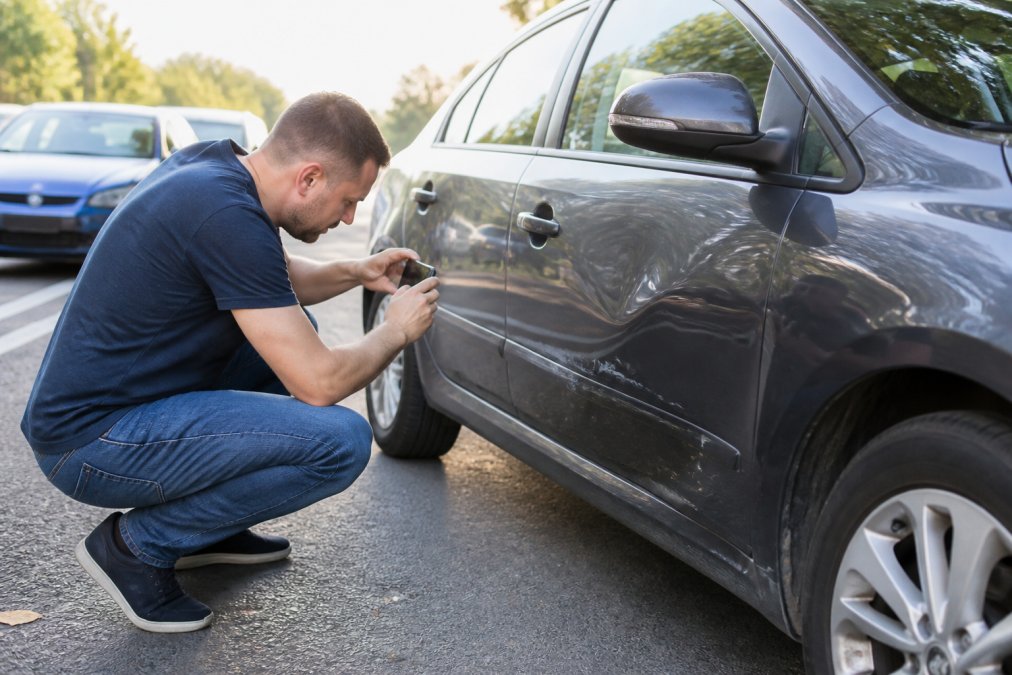
Here is a practical car accident evidence checklist to work through before leaving the scene:
- Photograph all vehicles from multiple angles, including wide shots showing their positions relative to each other and the road
- Photograph all property damage up close, including dents, scratches, broken glass, and deployed airbags
- Photograph skid marks, debris, road conditions, traffic signs, and signals
- Photograph any visible injuries on yourself or passengers
- Photograph the other driver's license, registration, and insurance card
- Note the exact time, date, weather conditions, and road conditions
- Write down the names and badge numbers of responding officers
- Obtain the police report number so you can retrieve the full collision report later
| Evidence Type | What to Capture | Why It Matters |
|---|---|---|
| Vehicle positions | Wide-angle photos before moving | Establishes fault and point of impact |
| Property damage | Close-up photos of all damage | Supports repair cost claims |
| Road conditions | Skid marks, debris, signals | Identifies contributing factors |
| Witness details | Name, phone, statement | Independent corroboration of events |
| Officer information | Name, badge number, report number | Access to official collision report |
| Injuries | Photos of visible injuries | Documents bodily injury at the scene |
Preserve Digital Evidence Before It Disappears
Digital evidence is time-sensitive. If your vehicle has a dashcam, back up the footage immediately. Many dashcams overwrite old footage automatically. Connect the device to your phone or a laptop and save the file before it's gone.
Check whether any nearby businesses or traffic cameras may have captured the accident. These recordings are often deleted within 24 to 72 hours unless someone requests preservation. Your attorney can send a formal evidence preservation letter to ensure this footage is retained.
According to the National Highway Traffic Safety Administration, intersection crashes are among the most common collision types. Intersection cameras can definitively establish which driver had the right of way.
Also check your phone's GPS history and any navigation apps you were using. This data can confirm your route and speed, which may become relevant if fault is disputed.
What to Say to Insurance After a Car Accident
Knowing what to say to insurance after a car accident is as important as knowing what not to say. The adjusters who contact you are professionals whose job includes minimizing payouts.
Report the accident to your own insurer promptly. Most policies require notification within a reasonable time after a collision. Provide the basic facts: the date, time, location, and the other driver's information.
What you should avoid:
- Giving a recorded statement before consulting an attorney, especially if injuries are involved
- Speculating about fault or offering opinions on what caused the accident
- Describing your injuries as "minor" or "not that bad", delayed symptoms are common
- Accepting a quick settlement offer before understanding the full extent of your property damage and medical expenses
Review your policy before speaking with any adjuster, and know your own coverage limits for property damage and bodily injury.
Handling Uninsured or Underinsured Motorists
Uninsured and underinsured motorist coverage is one of the most misunderstood parts of any auto insurance policy, and one of the most important. If the at-fault driver has no insurance or insufficient coverage to compensate you for your losses, your own uninsured/underinsured motorist coverage steps in.
As documented in Insurance Information Institute research on uninsured motorists, a meaningful portion of drivers on the road carry no insurance at all. If you're hit by one of them, your options without this coverage are limited to pursuing the other driver personally, which is often impractical.
Review your declarations page to confirm whether you carry this coverage and at what limits. If the at-fault driver is uninsured, file a claim under your own policy and notify your insurer immediately.
Seek Medical Evaluation Even Without Obvious Symptoms
See a doctor within 24 hours of any car accident, even if you feel fine. Whiplash, concussions, internal bruising, and soft-tissue injuries frequently produce delayed symptoms that appear hours or days after impact.

A same-day or next-day medical evaluation creates a documented link between the accident and your injuries. That documentation is essential for any bodily injury claim. Insurers frequently challenge injury claims when there is a gap between the accident and first medical contact.
Keep records of every medical appointment, diagnosis, treatment, and prescription related to the accident. Request copies of all medical records and bills.
Statute of Limitations for Car Accidents: Know Your Deadline
The statute of limitations for car accidents sets a hard deadline on your right to file a lawsuit. Miss it, and you generally lose the right to pursue compensation through the courts, regardless of how strong your case is.
The specific deadline varies by state. According to the Illinois General Assembly's compiled statutes, Illinois law sets a general deadline for personal injury claims, but the precise timeframe and any exceptions should be confirmed with a licensed attorney in your jurisdiction.
Do not assume you have unlimited time. Many people delay because they're waiting to see how their injuries resolve, only to discover they've forfeited their legal options. The clock typically starts on the date of the accident, not the date you discover your injuries.
Post-Accident Mental Health and Recovery
The psychological aftermath of a car accident is real and often overlooked. Many people experience anxiety, sleep disruption, difficulty concentrating, or reluctance to drive after a collision. Some develop symptoms consistent with post-traumatic stress.
If you're struggling emotionally after an accident, speak with a mental health professional. Document those visits the same way you document physical medical treatment. Emotional distress is a recognized component of pain and suffering damages.
When to Contact a Personal Injury Attorney After a Car Accident
The clearest signal that you need legal counsel is any accident involving injuries, disputed fault, significant property damage, or an uninsured driver. Insurance companies have legal teams working on their behalf. Having professional representation levels that playing field.
An attorney can evaluate your claim, communicate with insurers on your behalf, preserve evidence, and advise you on whether a settlement offer reflects the actual value of your losses. Personal injury representation is typically handled on a contingency basis, meaning fees are tied to the outcome of your case rather than paid upfront.
At Central Illinois Legal Advocates, we represent individuals facing exactly these situations: accidents with disputed liability, insurance companies that undervalue claims, and injuries whose full impact takes time to understand. Our practice covers personal injury, wrongful death, and criminal defense, and we are committed to walking clients through the process clearly, without the runaround.
If you've been in a car accident and you're not sure where your rights stand, the best step is a consultation. The sooner you understand your options, the more of them you'll have.
Car accidents leave people dealing with physical pain, financial pressure, and a legal process they never expected to navigate. Central Illinois Legal Advocates provides professional legal representation for personal injury claims, working directly with clients to build cases that reflect the true extent of their losses. Whether you're facing a disputed liability claim, an unresponsive insurer, or delayed injury symptoms, our team is available to discuss your situation. Request a consultation with Central Illinois Legal Advocates and get clarity on your next steps.
Frequently Asked Questions
What is the first thing you should do after a car accident?
The first priority is checking yourself and any passengers for injuries. Do not exit the vehicle if traffic makes it unsafe. Call 911 immediately so emergency services and law enforcement can respond. Even if the accident appears minor, a police report creates an official collision report that is essential for your insurance claim and any future legal action. Never assume everyone is fine, symptoms like whiplash and internal injuries can take hours or days to appear.
Should I file an insurance claim if I am not at fault?
Yes. Notify your own insurance provider promptly regardless of who caused the accident. Your policy likely requires timely reporting, and delaying can complicate your claim. If the other driver is at fault, their liability coverage should cover your property damage and bodily injury costs. However, if that driver is uninsured or underinsured, your own uninsured motorist coverage becomes critical. An attorney can help you determine which coverage applies and prevent a denial based on procedural errors.
How do I document a car accident scene for a legal claim?
Photograph all vehicle damage, the full accident scene, road conditions, skid marks, traffic signs, and any visible injuries. Collect the other driver's name, license number, insurance policy number, and vehicle registration. Get contact information from any witnesses and request a copy of the police report. If you have dashcam footage, back it up immediately. This car accident evidence checklist forms the foundation of your insurance claim and protects you if fault determination becomes disputed.
When should I contact a personal injury attorney after a crash?
Contact an attorney as soon as possible, especially if you suffered injuries, the other driver was uninsured, or the insurance company is disputing fault or offering a low settlement. The statute of limitations for car accident injury claims varies by state, so waiting too long can bar you from recovering compensation entirely. An attorney can handle communications with the insurance adjuster, preserve evidence, and advise on coverage limits and your legal rights before those deadlines pass.
This article was written using GrandRanker